
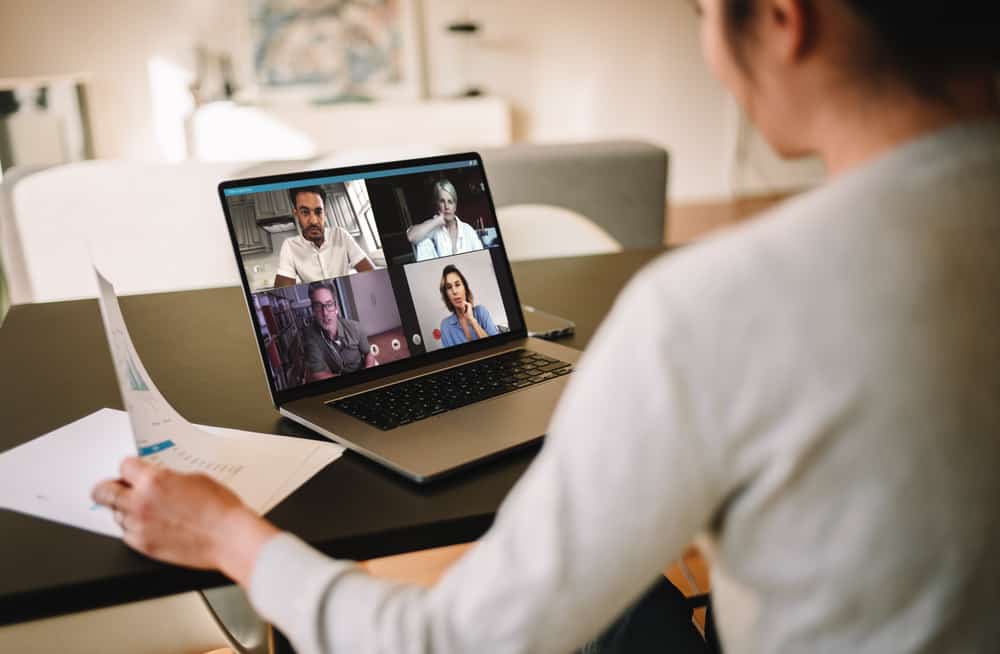
If the health crisis linked to Covid-19 has led us to rethink the way we live and consume, it has also and above all disrupted the way we work. During the lockdown, 95% of companies had to resort to remote work, whether willingly or not. While this measure brought great satisfaction to some, for others working from home proved to be far more laborious and complex than expected.
Remote work during the health crisis: an overview.
Just a few months ago, only 3% of employees in France, including 61% of executives, practiced remote work, and only on an occasional basis.
During the lockdown, this percentage rose to 24% nationwide and up to 41%, or four out of ten employees, among those living in the Paris region.
According to the National Association of HR Directors (ANDRH), no fewer than 95% of organizations resorted to remote work during this exceptional period. An unprecedented figure that caused a real upheaval for both companies and their employees.
Mixed results.
The good…
Regarding the advantages, time saved on commuting (38%) and better concentration (27%) were cited, as well as greater freedom in adapting work schedules to personal constraints (78%).
For those confined with their families, many found this period to be an opportunity to reconnect with their spouse and children. Precious moments made possible thanks to working from home and also to school closures.
While 53% of respondents considered their productivity unchanged, 24% felt more productive and efficient. And even though isolation is one of the main barriers to remote work, 76% of the employees concerned reported feeling just as “connected” to their teams, despite the physical distance.
And the not so good.
Issues highlighted included sometimes haphazard personal and family organization, lack of suitable equipment, the inability for some to set up a dedicated workspace, and insufficient training on various remote communication tools. Despite this, it emerged that everyone managed to make do with the resources available and adapted to their situation.
Overall, 41% still reported that remote work had a negative impact on their professional relationships (colleagues, hierarchy, clients, suppliers). The limited hindsight we currently have does not allow us to determine whether this impact is more related to remote work itself or to the pandemic context.
Listening to the various testimonials, it is easy to see that the level of satisfaction with the home-office experience varies extremely depending on job types, lifestyles, and individual preferences. But it also varies according to housing inequalities among the employees in question.
On the company side…
On the company side, while many were still reluctant to implement this practice, the forced shift during the pandemic had the effect of accelerating this process.
The companies that best weathered this crisis were those that had already implemented partial remote work, and for the others, the need to urgently reinvent themselves became apparent.
During this troubled period, the human resources department worked tirelessly to develop caring and better-adapted practices for employees without losing sight of the company’s results.
Managers also had their work cut out organizing remote team management, with no fewer than 48% seeing their workload increase considerably. Shorter but more regular meetings, personalized exchanges and schedules, tasks adapted to each person’s situation and possibilities… The priority during this period was employee well-being and organization in preparation for a return to normal.
What future for remote work?
It is difficult to go back after such a step forward.
If employers were able to meet the expectations and needs of their employees during the crisis, the latter are overwhelmingly calling for the continuation of this practice post-lockdown.
While full-time remote work is not yet a realistic prospect, companies will find it increasingly difficult to legitimately refuse their employees the option of working from home at least one day a week.
Indeed, no fewer than 79% of them say they are willing to give up their assigned desk in order to work remotely. Not surprising when you know that open-plan offices, despite being increasingly widespread, tend to reduce workers’ concentration and efficiency.
While work organization will be one of the key questions in the months ahead, it is certain that the possibility of working from home is already one of the selection criteria for people currently looking for a job. It will therefore be in companies’ interest to show openness and innovation on this subject if they wish to attract new talent and retain their current employees.
As home-office work tends to become the norm in companies, they will also need to reassess their space requirements. Indeed, implementing a rotation of on-site presence could free up considerable office space and thus allow companies to rent smaller spaces and reduce costs.
Organizations facing an uncertain future.
In the aftermath of a health crisis and on the eve of an economic crisis, everything is accelerating and nothing is certain. Companies will need to learn to adapt quickly to various events in order to ensure their sustainability.
You are a company and need personalized support from professionals to organize and structure the implementation of remote work within your organization? Our Boost’RH experts are at your disposal to help you with this transition.