

Understanding the Fundamentals of Horizontal Management
Definition of Horizontal Management
Horizontal management, as opposed to vertical management, flips the traditional organizational pyramid in favor of a “flatter” structure, reducing intermediate hierarchical levels. Unlike the vertical system where power and decision-making are concentrated at the top, horizontal management eliminates layers, thereby fostering collaboration, transparency, and autonomy. Teams work as a network rather than following a cascading structure, enabling fluid communication and agile decision-making processes.
Key Principles of Horizontal Management
Horizontal management is a management style that emphasizes team cohesion. It is a different way of managing, based primarily on employee empowerment and accountability.
Every employee, even apprentices or interns, is invited to share their ideas, take initiative, propose solutions, and ultimately take charge of their career. By granting equal value to every employee in the company, regardless of their seniority, age, or hierarchical level, this management style fosters greater involvement.
Indeed, feeling valued, heard, and listened to, the employee is driven to contribute to the company’s development. Their initiatives are recognized, which motivates them to fully invest in their work and achieve their objectives. At a time when well-being and quality of work life are recognized indicators of productivity, this management style is increasingly adopted by companies.
Finally, horizontal management involves horizontal decision-making. Every employee is involved in the decision-making process; every voice counts as much as the next. The collective prevails over the individual. By removing hierarchical levels, everyone feels involved, stimulated, and new ideas can emerge.
These are the principles on which horizontal management is based, offering multiple benefits at both the individual and collective levels.
The Advantages of Horizontal Management in Companies
Fostering Collaboration and Communication
As mentioned above, horizontal management offers a great number of advantages. First, horizontal management promotes collaboration and communication. Indeed, freed from silos, information flows better and more freely within the organization. Team spirit is strengthened since everyone is on equal footing. Teams adopt more direct, transparent communication and resolve problems more quickly. By encouraging transparency and valuing each member’s contribution, horizontal management establishes the foundations of a corporate culture where collaboration and communication are essential pillars of collective success.
Encouraging Employee Autonomy and Accountability
Intrinsically, horizontal management empowers and gives autonomy to employees. It fosters a climate where every team member is encouraged to take initiative, as responsibility is no longer reserved for upper echelons but distributed equitably. By giving employees an active role in decision-making, horizontal management strengthens their sense of belonging and involvement. This approach also offers continuous learning opportunities, as employees are led to develop a varied range of skills they might not have developed as quickly in a more vertical management system. Accountability and autonomy are the pillars of horizontal management. The resulting autonomy stimulates creativity, thereby encouraging innovation.
Stimulating Innovation and Creativity
Horizontal management also proves to be a powerful catalyst for creativity and innovation within companies. By eliminating hierarchical barriers, it encourages the free flow of ideas, creating fertile ground for innovation. Teams interact fluidly, allowing for a diversity of viewpoints and experiences. The autonomy granted to employees in such a framework stimulates initiative and the exploration of new approaches, from which innovative ideas can emerge. Thus, horizontal management creates an environment conducive to innovation and the emergence of creative solutions.
Improving Employee Satisfaction and Engagement
Finally, horizontal management is an essential driver of employee satisfaction and engagement. This management style gives employees a heightened sense of importance through their opportunities to make meaningful contributions. By encouraging active participation in the decision-making process, horizontal management strengthens the bond between employees and the company, thereby cultivating a strong sense of belonging. The autonomy granted to employees in carrying out their tasks fosters a fulfilling work environment where everyone feels valued and competent. The transparency that characterizes this model reduces friction and misunderstandings, contributing to a climate of trust. In summary, horizontal management creates ideal conditions for a satisfied, engaged, and invested workforce in the company’s collective success.
The Advantages of Horizontal Management for the Company
Beyond the individual benefits that reflect positively on the company (increased productivity, better engagement, etc.), the benefits of horizontal management for the company itself are numerous.
Adopting a horizontal management style demonstrates that the company is keeping pace with the times and adapting to the transformation of working methods. In a world where innovation and digitalization hold a predominant place, agility is essential, and vertical organizational systems have less of a place in the face of current and future challenges.
Finally, optimizing the company’s internal operations is reflected externally through a better brand and employer brand image.

Horizontal Management Practices and Tools
There are several practices specific to horizontal management and numerous tools that support collaborative management.
Participative Management and Collective Decision-Making
Participative management and collective decision-making are essential elements of horizontal management. In this model, participative management involves the active engagement of employees in decision-making processes. This approach fosters a climate where everyone contributes to the formulation of strategies and solutions, leveraging the richness of collective knowledge. Decision-making becomes a collaborative effort, eliminating the weight of unilateral decisions. Participative management strengthens employees’ sense of belonging, stimulating their involvement in achieving the company’s objectives. Participative management, in the context of horizontal management, is a key to unlocking the collective potential of teams and stimulating continuous innovation, as we saw earlier.
Examples of Participative Management and Collective Decision-Making
Operational Process Review: teams composed of members from different departments meet regularly to evaluate the effectiveness of existing procedures and propose improvements. Everyone has the opportunity to share their expertise, which promotes a comprehensive understanding of operational challenges. Collective decision-making comes into play when choosing which adjustments to make. This approach not only improves operational efficiency but also strengthens employees’ sense of belonging.
Collaborative Strategic Planning: brainstorming sessions involve members from various hierarchical levels, allowing for a diversity of perspectives. Major strategic decisions, such as introducing new products or expanding into new markets, are made collectively. This participative management ensures that strategic decisions are informed by the experience and vision of the entire team, creating a more robust strategy aligned with the company’s overall objectives.
Transparency and Open Communication
Transparency is a pillar of horizontal management, eliminating traditional barriers between management and employees. Critical information, such as strategic objectives and key decisions, is shared openly, thereby fostering a sense of trust within the organization. Communication becomes a two-way channel, encouraging employees to express their ideas and concerns. This openness strengthens engagement, allowing everyone to feel involved in decision-making processes.
Examples of transparency and open communication:
Setting Your Own Compensation: in some companies practicing horizontal management, employees have the opportunity to set their own compensation. To do so, they must consider their level of responsibility, seniority, the company’s salary scale, and its financial resources.
Open and Transparent Meetings : meetings are accessible to all employees, provided that each person’s participation in the meeting is active. Top-down-only meetings no longer exist; everyone is an active participant in meetings.
Implementing Horizontal Organizational Structures
Horizontal management requires deeply modifying the company’s organizational structure. It will therefore be necessary to deconstruct former established models and introduce new horizontal practices like those we discussed earlier. This involves, among other things:
- eliminating intermediate management levels;
- establishing a new, more transparent communication model;
- redesigning workspaces to facilitate exchanges and collaboration;
- establishing a collaborative mindset and a general climate of trust;
- simplifying decision-making processes and procedures;
- implementing collaborative tools that support this management style.
Examples of Actions to Implement a Horizontal Structure Within Your Company:
Free choice of manager: letting employees choose their own “managers”. Employees tend to place more trust in someone they have chosen, which subsequently facilitates communication and transparency.
Making all employees shareholders in the company. This is a bold measure, but it has the advantage of motivating everyone to fully invest in the company’s strategy.
Digital Tools Supporting Horizontal Management
Today, numerous digital tools exist to facilitate exchanges and immediate, transparent, and close communication between every department and every level of the company. A key step will therefore be to install these digital communication and project management tools and have employees adopt them.
Examples of Digital Tools for Horizontal Management:
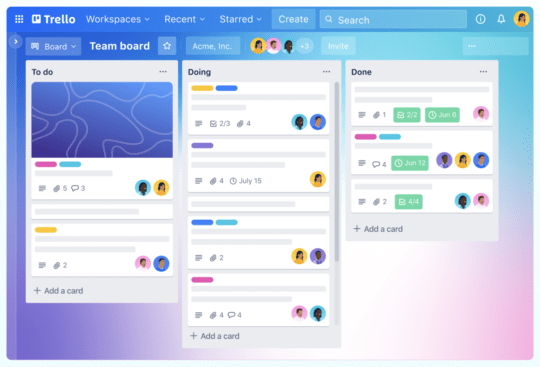
Project Management Platforms: tools like Trello, Asana or Monday facilitate collaboration and task management within horizontal teams.
Instant Messaging and Collaboration: platforms like Slack or Microsoft Teams enable instant communication and real-time collaboration using dedicated channels for each project.
Knowledge Management Tools: platforms like Confluence or Notion enable companies to create, share, and organize knowledge.
360° Feedback Systems : tools such as 15Five or Lattice enable companies to collect 360-degree feedback, thereby fostering a culture of continuous feedback.
Tips for Implementing Horizontal Management in Your Company
Implementing horizontal management in a company requires a methodical approach and thoughtful change management. Here are some essential tips for a successful transition.
First, start with a gradual transition. Implement horizontal management in pilot teams before rolling out the approach across the entire organization. This will help mitigate resistance to change and facilitate adaptation.
Communication is crucial. Communicate clearly about the changes by explaining the motivations, expected benefits, and implications for employees. Transparency promotes buy-in and reduces uncertainty.
Actively involve employees in the transition process. Encourage their participation by gathering their ideas, organizing brainstorming sessions, and creating working groups. Their involvement strengthens buy-in and contributes to a smoother transition.
Adapt your HR practices to support horizontal management. This may include adjustments in recruitment, training, and skills management policies to foster the emergence of versatile and autonomous competencies.
Regularly evaluate results. Implement key performance indicators to measure the effectiveness of horizontal management. Learn from feedback and adjust practices accordingly.
Encourage a culture of continuous feedback. Establish formal and informal mechanisms to gather employee feedback. This promotes continuous improvement and strengthens the bond between management and teams.
Implement collaborative tools to support the adoption of new, more transparent work and communication methods. Train all employees on the tools to facilitate adoption.
Finally, to help with the transition to a more collaborative management style, you can call upon interim managers or external HR experts. They will bring a fresh perspective, a broader view, and facilitate the implementation of these new processes through a pre-defined action plan. They can also coach managers through their transition with individualized coaching. Indeed, managers will often need to shift from a boss posture to that of a coach — it is an entire mindset and deeply ingrained habits that they need to change.
By following these tips, leaders can facilitate the transition to horizontal management, creating an environment conducive to innovation, collaboration, and employee satisfaction.
Conclusion
In conclusion, horizontal management is emerging as an organizational model in tune with our era, sometimes profoundly redefining the way companies operate. By fostering collaboration, autonomy, and accountability, this management style stimulates innovation and strengthens employee engagement. Transparency and open communication, pillars of this approach, create an environment conducive to mutual trust and employee fulfillment. Operational agility, collective decision-making, and diversity of skills enable a resilient corporate culture, adapted to the challenges of a constantly and rapidly evolving digital world. Participative management, combined with a gradual transition and continuous evaluation, form the foundation of a successful transition to horizontal management. By adopting this management style, companies can not only thrive in a changing environment but also foster a positive dynamic within their teams, propelling the company into the future with confidence and success.