

What Is Employer Brand?
Definition and Key Elements of Employer Brand
Employer brand, or employer branding, refers to the reputation and perception that a company creates as an employer. It encompasses the image, values, corporate culture, as well as the overall experience that current and potential employees have within the organization. In other words, employer brand is the way a company presents itself as an employer in the job market.
The key elements of employer brand include transparent communication of the company’s values, corporate culture, professional development opportunities, employee benefits, and quality of work life. An effective employer brand strategy also involves a positive presence on social media, employee testimonials on rating platforms such as Glassdoor, awards and recognition such as the Great Place To Work certification, as well as Corporate Social Responsibility (CSR) initiatives.
Impact on Talent Attraction
The impact of employer brand on talent attraction is significant. A positive image as an employer attracts qualified and motivated candidates, thereby reducing recruitment costs. Companies that are well-perceived as employers also find it easier to retain their existing employees, thus reducing staff turnover. Moreover, a strong employer brand strengthens employee loyalty, improves productivity, and contributes to the creation of a motivating corporate culture.
The Benefits of a Strong Employer Brand
Competitive Advantages of an Attractive Employer Brand
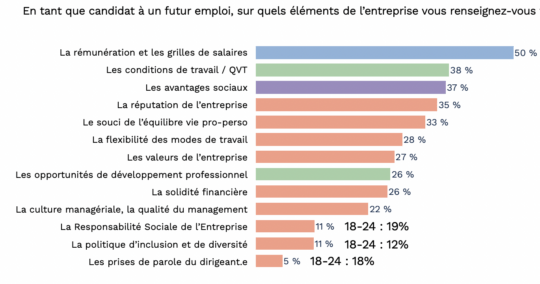
A strong employer brand gives a company numerous strategic advantages, from talent attraction to employee retention, through to improved reputation and the promotion of diversity. First, a solid employer brand attracts quality candidates, thereby reducing recruitment costs and accelerating the hiring process. Beyond salary, which remains the top priority, talent tends to seek companies offering professional development opportunities, good working conditions, and attractive benefits—all elements that contribute to strengthening the employer brand.
Once talent is attracted, a strong employer brand facilitates employee retention. Employees are more inclined to stay with a company that values their contribution, offers them development prospects (career, skills), and promotes a fulfilling work environment. This reduces the staff turnover rate and helps build a stable and engaged team.
Furthermore, a positive employer brand strengthens the company’s overall reputation. Customers, business partners, and investors are influenced by the external perception of how a company treats its employees. A solid reputation as an employer can therefore help generate trust and strengthen the company’s credibility in the market.
Strategies to Strengthen Your Employer Brand
Techniques and Approaches to Improve Your Company’s Perception
Strengthening your employer brand requires implementing well-thought-out strategies, encompassing communication, corporate culture, and the employee experience.
Among the most common strategies, we can notably mention:
- Investing in training and development : offering continuous training and professional development opportunities demonstrates a commitment to employees. This contributes to creating a learning culture and attracts talent eager to advance in their career. 26% of working professionals consider development opportunities as a decisive factor in their choice when joining a company (WTTJ 2023 Barometer)
- Social media communication : social media are powerful tools for shaping and disseminating an employer brand. Companies can share employee testimonials, projects, and internal events to strengthen their image.
- Candidate and employee experience : offering a positive experience from the recruitment process through to onboarding helps forge a memorable first impression. Once employed, ensuring their well-being and fulfillment strengthens employee retention and engagement.
- Highlighting employee benefits : clearly communicating employee benefits, such as health insurance, leave policies, company catering, and wellness programs, has become an expectation. These elements contribute to attracting talent who seek comprehensive packages.
- Involving employees in the employer brand : encouraging employees to become employer brand ambassadors strengthens its authenticity. Employee referral programs are increasingly common within companies. Employee testimonials convey a credible and positive image to candidates, 50% of whom trust these testimonials (WTTJ 2023 Barometer).
Want to improve the quality of work life and working conditions within your company to positively impact your employer brand? Our experienced HR consultants in QWLWC can provide you with pragmatic solutions that meet employee expectations for improved quality of life while addressing your economic constraints and objectives.
The Importance of Corporate Culture and Values
Of course, all these strategies must be consistent with the company’s culture and values.
Defining and communicating company values is now essential because candidates and employees want to work for companies that share their values. Clearly articulating the company’s values and communicating them transparently helps stand out. 20% of employees say they would rather be unemployed than work for a company whose values do not align with theirs (Randstad Brand Research 2023 study).
Promoting a positive corporate culture is essential for attracting and retaining talent. Encouraging collaboration, diversity, work-life balance, and recognition of achievements fosters an attractive work environment. 45% of working professionals need to work for a company that offers mental health and well-being benefits and actively supports equity, inclusion, and diversity (Randstad 2023 study).
Integrating Current HR Trends

How Do Current Trends Influence Employer Brand?
Current trends in the professional world, such as remote work, diversity, and inclusion, have a significant influence on how a company is perceived as an employer, and they play a crucial role in strengthening employer brand.
Flexible work, including the option of remote work or schedule adjustments, has become an important expectation for many employees. Companies that successfully integrate this flexibility into their corporate culture strengthen their attractiveness. Some companies have even adopted permanent remote work or unlimited leave, thus demonstrating their commitment to work-life balance.
Diversity and inclusion are also key elements that influence employer brand. Talent seeks work environments where everyone is valued, regardless of their background, gender, sexual orientation, or other characteristics. Companies distinguish themselves by implementing concrete initiatives to foster diversity, such as setting representation targets and establishing awareness programs.
Inclusion goes beyond simple numerical diversity and involves creating an environment where everyone feels heard and included. Microsoft, for example, has highlighted internal programs such as the Neurodiversity at Microsoft initiative to welcome and support neurodivergent employees.
Young people (aged 18-24) are more sensitive than their elders to these diversity and inclusion issues. The company’s CSR policy is a decisive criterion for company choice for 19% of them (vs. 11% of all working professionals) according to the Welcome to the Jungle 2023 Employer Brand Barometer.
The Impact of Technology on Employer Brand
Today, when applying for jobs, professionals seek information about the company: 36% consult the company website, 29% check professional social networks like LinkedIn, and 21% read employee reviews on rating platforms and browse the company’s social media accounts (Welcome to the Jungle 2023 Employer Brand Barometer).
The impact of technology and digital platforms on employer brand is therefore considerable, shaping the way companies interact with talent and cultivate their image in the job market. Social media plays a central role, enabling companies to share their corporate culture, their successes, and to engage in direct dialogue with potential candidates. Platforms such as LinkedIn, Glassdoor, and Indeed offer spaces where current and former employees can share their experiences, directly influencing the external perception of the company.
Moreover, recruitment technologies, such as ATS (Applicant Tracking Systems), streamline the recruitment process by automating certain administrative tasks, allowing HR teams to focus on human interaction and building relationships with candidates. Technology is redefining how companies build and maintain their employer brand, offering powerful tools for communication, engagement, and continuous improvement of the candidate experience.
Conclusion
In a competitive and constantly evolving job market, a solid employer brand strategy is essential for companies seeking to attract, retain, and motivate the best talent. By developing a positive image as an employer, highlighting their corporate culture, values, and commitment to employee well-being, companies can stand out in the market and strengthen their attractiveness. Investing in a strong employer brand is no longer simply an option but a necessity to ensure company growth.