

The Stakes of Recruitment
The Impact of a Bad Hire on the Company
A company’s long-term success depends directly on its hiring decisions, as the lifeblood of the company lies in its employees. A series of bad hires can therefore have significant repercussions on the overall performance of an organization.
A bad hire can generate considerable costs: expenses related to recruitment, training, and the new employee’s salary prove to be a non-profitable investment if the candidate fails to adapt to the company culture or to meet the objectives set. Internal tensions may arise, degrading the work atmosphere and team spirit. This can lead to a loss of productivity and a decline in work quality, and may have negative repercussions on the company’s reputation.
Depending on the source, it is estimated that the cost of a failed recruitment is equivalent to 15 to 25% of the employee’s annual gross salary. This cost is composed of easily quantifiable direct costs (salary and benefits, employer contributions, job posting costs, replacement costs, etc.) and indirect costs (onboarding costs, impact on team dynamics and productivity, company image, etc.). A recruitment is considered failed when the employee leaves the company within 12 months of being hired.
Recruitment Criteria
With this in mind, finding, recruiting, and retaining the right candidate is a major challenge. Traditional recruitment criteria play a central role in this process. Professional experience, education, and technical skills remain essential criteria for evaluating a candidate’s suitability. However, more and more companies recognize the importance of non-technical competencies, such as interpersonal skills, problem-solving, and adaptability. Effective recruitment is not limited to identifying the required technical skills but also encompasses understanding the candidate’s values, personality, and motivation.
These qualities are often assessed through interviews, role-playing exercises, and increasingly through personality tests.
What Is a Personality Test in a Job Interview?
Personality Test: Definition
In the context of a job interview, a personality test is an assessment method designed to analyze a candidate’s traits, behaviors, and psychological characteristics. It aims to provide in-depth information about the applicant’s personality in order to evaluate their compatibility with the company culture, their ability to integrate into the team, and their capacity to adapt to the requirements of the role.
This type of test typically relies on standardized, scientifically validated questionnaires designed to measure various aspects of personality such as dominant traits, interpersonal skills, stress management, decision-making, and other psychological dimensions relevant to the professional context. These tests often draw on a personality inventory, a series of questions designed to reliably and consistently measure an individual’s personality traits.
These assessments generally involve a detailed personality questionnaire designed to explore the different aspects of the candidate’s character and behavioral preferences. The candidate responds to these questions subjectively, expressing their preferences, reactions, and attitudes.
The results of a personality test provide recruiters with in-depth insights into how an individual reacts to certain situations, interacts with others, and handles professional challenges. This information then complements traditional assessments based on experience and technical skills, thereby providing a more complete picture of the candidate.
It is essential to emphasize that personality tests must be administered ethically, respecting the confidentiality of personal data and ensuring that results are used in a relevant and objective manner. These tests should not be the sole decision-making criterion but rather considered as an additional tool in the recruitment process, offering a broader perspective on the compatibility between the candidate and the company.
Different Types of Commonly Used Personality Tests
The various personality tests, such as the MBTI or DISC, classify individuals into different personality types, thereby providing useful perspectives on how they might fit into a specific work environment.
MBTI (Myers Briggs Type Indicator): the most well-known
The MBTI (Myers-Briggs Type Indicator) test is particularly popular, offering insights into the candidate’s personality type based on the psychological theories of Carl Jung. This test, originating from the United States, is the most widely used with nearly 20,000 tests administered per day. It identifies the candidate’s dominant psychological preferences among 16 personality types, based on four dimensions: extraversion/introversion (energy orientation), sensing/intuition (information gathering), thinking/feeling (decision-making), judging/perceiving (mode of action).
For the recruiter, the test results indicate whether the candidate is suited to the proposed position and which role they might evolve into.
DISC: behavioral profile in colors
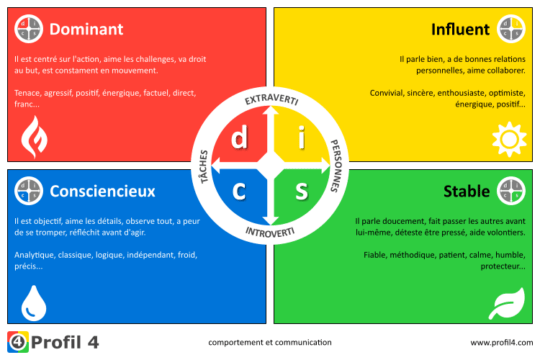
The DISC tool, an acronym for Dominant, Influential, Steady, and Conscientious/Compliant, represented by colors (red, yellow, green, and blue), is an assessment tool that identifies a candidate’s behavioral and communication style. Based on their dominant colors, the recruiter can evaluate whether they will integrate into the team and how they can better fit in. This test helps understand communication styles to better adapt how we communicate with others based on their needs.
AssessFirst: the predictive approach
AssessFirst offers several solutions including a candidate assessment based on three criteria: personality, motivations, and cognitive abilities.
The recruiter thus obtains an overview of the candidate’s ability to succeed in their role, to integrate into the team, and a fit score relative to expectations.
PAPI 3: a widely used tool in France
The PAPI 3-i test, used by approximately 10% of recruiters according to France Travail, provides detailed results on work styles. It helps predict an employee’s performance and autonomy.
The 15 Personalities Test
This test classifies individuals according to 15 major behavioral profiles. It analyzes how a person communicates, handles pressure, makes decisions, or interacts within a team. Used in recruitment, it provides a comprehensive overview of the candidate’s professional functioning.
Other Tests Used
- Big Five (OCEAN): analyzes openness, conscientiousness, extraversion, agreeableness, and emotional stability.
- PerformanSe: the PerformanSe test is a tool developed to predict behaviors in a professional context.
- SOSIE, Predictive Index, CentralTest, TalentMap, Boussole Pro: all offer HR tests focused on performance and integration.
The Advantages of Personality Tests in Job Interviews

Objective Assessment of Personality Traits
Personality tests, as assessment tools in the job interview process, present a series of advantages that contribute to more informed and objective decision-making in recruitment. First, these tests offer an objective evaluation of candidates’ personality traits, bringing a scientific dimension to the assessment of interpersonal and behavioral competencies. Personality tests can reveal important aspects of an individual’s professional personality, including their approach to teamwork, stress management, and leadership style. By measuring characteristics such as extraversion, emotional stability, and stress tolerance, recruiters can obtain reliable and comparable data across candidates, thus contributing to a more balanced evaluation.
Predicting Job Performance
Personality tests have demonstrated their ability to predict job performance. By analyzing test results, employers can anticipate how an individual will react to specific professional situations, thus facilitating a better match between a candidate’s personal competencies and the requirements of the position. This reduces the risk of incompatibility between the new employee and their role, promoting faster and more successful integration and therefore increased productivity.
Complementarity with Other Recruitment Methods
Another major advantage lies in the complementarity of personality tests with other recruitment methods. While experience and technical skills remain crucial criteria, personality tests offer a unique perspective on how an individual approaches challenges, communicates, and interacts within a team. Integrating these results with traditional interviews and other assessments enriches the overall picture of the candidate. When two candidates have equal qualifications and professional experience, the personality test enables recruiters to make an informed and objective choice.
Reducing the Risk of Recruitment Errors
The use of personality tests significantly contributes to reducing the risk of recruitment errors. Hiring mistakes can generate considerable financial and operational costs for a company. Personality tests, by providing an in-depth assessment of behavioral traits, reduce the risk of selecting candidates whose personality does not align with the company culture or the requirements of the position. This helps minimize costs related to poor integration, training, and staff replacement.
The Limitations of Personality Tests in Job Interviews
It is crucial to note that, although these tests provide valuable information, they only capture part of what constitutes an individual’s complete personality. Understanding personality in its entirety requires a more holistic approach, combining test results with observations and in-person interactions.
Risk of Bias and Subjectivity
Despite the undeniable advantages of personality tests, there remain certain inherent limitations to these tools. Among the main limitations are the biases and subjectivity that can influence results. Indeed, personality tests often rely on models developed in specific cultural contexts, which can lead to inequalities and misinterpretations among candidates from different backgrounds. Furthermore, the inherent subjectivity of participant responses can be influenced by factors such as current mood, perceived expectations, and the desire to provide socially acceptable answers. For example, a candidate for a sales position may skew certain answers to appear more extroverted in order to fit the expected profile.
Limitations of Performance Predictability
Another significant limitation lies in the predictive capabilities of personality tests regarding job performance. While these tests can offer indications of how an individual may react in specific situations, they do not necessarily guarantee success in a particular position. Technical skills, professional experience, and other factors can play an equally crucial role in an individual’s professional success. Personality tests cannot provide a complete picture of the skills and knowledge necessary to excel in a specific role.
Importance of Results Interpretation
The interpretation of personality test results also presents a major challenge. The complex nuances of human personality cannot always be comprehensively captured by standardized questionnaires. Evaluators may face difficulties in fully understanding the meaning of certain responses and in correctly interpreting the variety of personality traits measured. Some results extend over pages and pages, without a summary. Results must therefore be interpreted with caution, recognizing that personality is a dynamic and complex concept. Test results are merely an additional piece of the candidate’s profile; they should complement the job interview, reference checks, or case studies and role-playing exercises.
A hiring decision, or rejection, can under no circumstances be justified solely by the result of a personality test.
How to Effectively Use Personality Tests in Job Interviews?
Integrating Personality Tests into the Recruitment Process
If you wish to incorporate a personality test as a step in the recruitment process, be careful not to overburden your overall process. Consider the total number of interviews for a candidate who passes through all stages and any other tests (role-playing, case studies, etc.) before deciding to add a personality test. The recruitment market remains tight, and certain roles face talent shortages. For some positions, it is therefore not advisable to add an extra step to the recruitment process. The personality test should not appear as a barrier that could demotivate candidates by lengthening the timeline.
If used, the test must serve a genuine purpose that should be explained to the candidate beforehand: the desire to find the candidate who will best integrate into the team, verifying the candidate’s compatibility with the company values, etc. Personality assessment must be carefully integrated into the recruitment process, ensuring that it complements rather than replaces traditional skills assessment methods.
Training Recruiters in the Use of Personality Tests
To counter the biases of subjectivity and the limitations raised, training recruiters in the use and interpretation of results is essential. This point is significant as companies must invest time and resources to administer, analyze, and interpret results, which can extend the overall recruitment timeline.
Companies that wish to do so can also seek support from recruiters, such as the recruitment experts at Boost’RH, who are experienced in administering tests and handling results (interpretation, debriefing with the company and the candidate).
Ethics and Confidentiality in the Use of Tests
Recruiters who use personality tests must adhere to strict rules regarding ethics and data confidentiality. First, it is essential that candidates are transparently informed about the nature and purpose of the tests, as well as how the results will be used.
Data collection and storage must comply with applicable laws and regulations to ensure the confidentiality of personal information. Companies must ensure that only authorized individuals have access to test results and that this information will not be used in a discriminatory manner. It is crucial to ensure data security against potential breaches and to allow candidates to access their own results if needed.
Conclusion
In conclusion, the use of personality tests in job interviews offers significant advantages but also limitations to consider. On the positive side, these tests provide a structured method for evaluating candidates’ behavioral traits, thereby facilitating objective and informed decision-making. They help target specific competencies and anticipate performance in the professional context. However, it is crucial to acknowledge their limitations, including cultural sensitivity, the potential for bias, and the risk of excessive generalization.
For effective use of personality tests, companies are advised to ensure complete transparency with candidates, clearly explaining the purpose of the assessments and how the results will be used. Aligning the tests with the specific organizational culture is essential to maximize their relevance. Additionally, training evaluators in the correct interpretation of results is crucial to avoid erroneous conclusions.
Finally, it is imperative to emphasize that personality tests should not be the sole basis for a decision. A comprehensive and balanced evaluation, combining interviews, references, and technical skills assessment, remains essential to ensure the accuracy of the recruitment process. By integrating personality tests, companies can optimize their ability to select candidates who fit not only behaviorally but also in terms of skills and company culture.